Showing posts with label Robert Abel and Associates. Show all posts

Thursday, August 4, 2016

Fight Club, Richard Baily and the Subversion of Reality


It goes without saying that when a genuinely interesting movie comes out in America, that the film critics and media organizations will attack it and lie as hard as they can about what it is about in order to minimize the number of people who see it. That is the job of the media in our oppressive society. Whereas when we have a stupid movie like Avatar, everyone gets damp about it even though it has no content. So I heard for years that Fight Club (1999) glorified violence and so forth and so on and never had any desire to see it. Well I happened to see it the other day, and guess what, it has nothing whatsoever to do with what they said it did.

But we are not here to talk about content, or about the repression of truth, or about how shallow and superficial our civilization is. We are here to talk about something more important. Which is to say, visual effects.

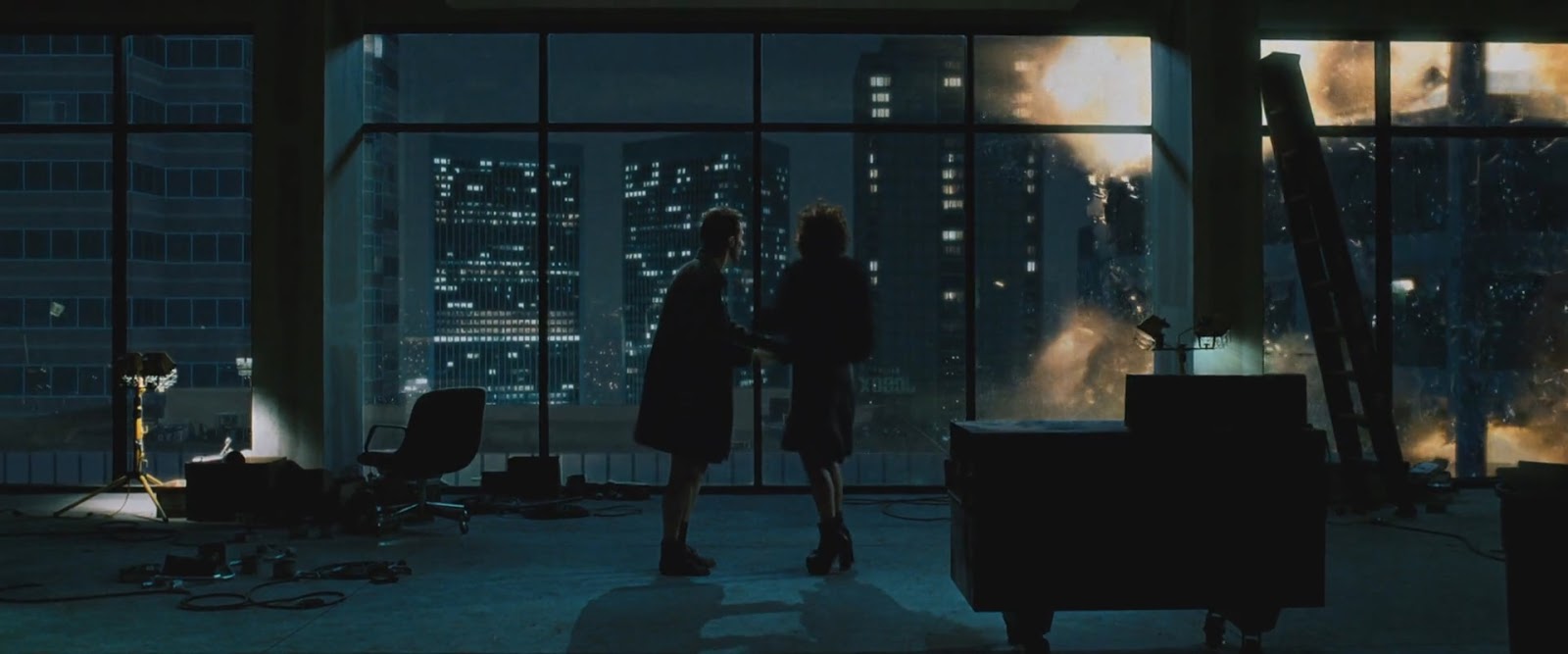
What is the role of the artist? The role of the artist is to manufacture consumer products in order to maximize shareholder value of course. And it turns out that one artist that I knew quite well was the artist who blew up the buildings at the end of Fight Club. My friend Doctor Baily of Image Savant, under the direction of visual effects supervisor Kevin Haug and director David Fincher, blew up those buildings.


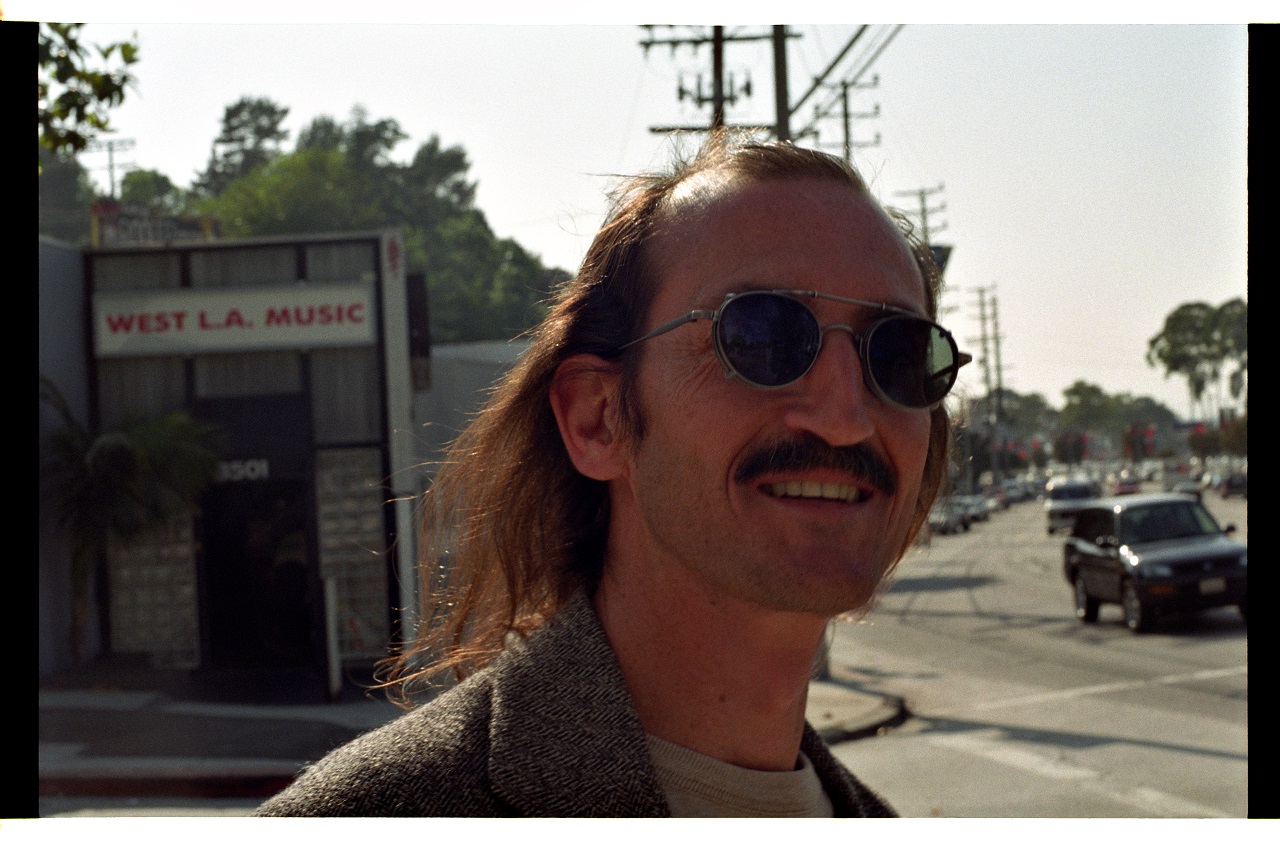
Richard "Dr" Baily of Image Savant


Furthermore, eschewing “photorealism”, that grossly abused and misunderstood term, the buildings blow up in a poetic and dreamlike fashion, thus contributing to the telling of the story. As we do not know if those buildings really did blow up, since by that time we are quite sure we do not know what is real and what is the perception of a disturbed individual.

And to do so a mere two years before the real buildings blew up at the World Trade Center! How wonderful for him, to have actually predicted and, symbolically at least, participated in the single event that has caused so much war and misery in our world.

Rarely does visual effects have such an impact.


Fight Club on IMDB


Tuesday, November 4, 2014

The Debevoise Brothers Win the Finals

draft

Allen Debevoise (aka "devo") and one or more of his brothers sold one of their companies for $200M.  I have known Allen since 1980 or so at Robert Abel & Associates and have watched (at a distance) his entrepreneurial activities since 1991 or so.   I still have the drink ticket from Consumacio in Barcelona where we were being hosted as part of Ars Futura when the first Iraq war started in 1991.

I do not know the details and I will update this post when I do.  But Allen has been tireless, inventive, and with a tremendous positive energy through thick and thin, and company after company. Possibly even a genius. Certainly an inspiration.  And without doubt one of several people I know whose success is based in no small part on their own hard work over a very long period of time, in spite of adversity, and as a reward for merit.

As difficult as it may be to believe that merit and hard work gets you anywhere, nevertheless it seems to be so in his case.

Tuesday, May 13, 2014

Mysteries of Underbidding in Visual Effects: Underbidding for Effect and by Mistake


Part one of this series is here.

In part one of our series on the “mysteries of underbidding in visual effects”, we discussed some of the reasons why a vfx production company might deliberately underbid a project where underbidding is defined as charging less money than they theoretically “ought to” have.

I realize that I had left out a very important type of “deliberate underbidding” in part one and that is “underbidding for marketing” or perhaps "underbidding for effect".  It is the phenomenon of bidding at one price but fully intending to spend more money than budgeted in order to achieve a certain level of quality. Robert Abel & Associates was famous for doing this. Every year, at least one project and generally more than one, was given this special attention. The studio would work extra hard on that project and of course it would go over budget, but generally when we were done we had done work that no one else in the world (or very few) could do. The result was that we had excellent, recent work on our reel which we could use to get the next year's worth of work. And of course we had a very happy client, one would hope. Another fringe benefit of such a project is that it helped with recruiting and keeping artists and technical directors as they knew there was a good chance that they would be working on some of the best work of its type in the world. Of course, Bob was considered crazy for doing this, but it worked well for him for many years.

But there are three other categories of “underbidding” and they are (a) underbidding because of a mistake (misunderstanding the scope of work), or (b) underbidding because of coercion, or (c) the project was not particularly underbid at all, except maybe in retrospect, because there are politics going on above and beyond merely getting the work done.

We discuss the “By Mistake” phenomenon in this post.

First, lets recall what a “bid” is. It is essentially an estimate for what a facility thinks they can do a project for, in conjunction with a schedule and other terms and conditions of a contract. It is the facility's combined judgment about what it will take them to do the work described by the client in storyboards, the script, discussions about the project and knowledge that the facility has about what it is like to work with this client and do this type of work. That judgment includes calculations of overhead, of labor, of capital improvements (e.g. computers) as well as opportunity costs and so forth. If the new company has to move during a project (and many new companies have to move), that is also included implicitly in the budget and schedule. It also has built in ideas about the kind of service that the facility will provide and the client will receive. It will not surprise you to hear that a new company will rarely be able to charge the same sort of fees that an established player with many projects to their credit can charge.

Now when a facility is new, they may not have their costs and production processes completely understood. Often new facilities are started with “enthusiasm” and “optimism” which usually means that they have naively underestimated what some of the costs are. Or they may have made some clever arrangements to keep their costs under control but discover that those arrangements do not work out in the real world as well as they do when they are being conceived. Or any of a hundred things that can occur when you are doing a startup.

Also, all leading edge companies in visual effects and other types of advanced media are doing R&D at the same time. If they are not, then they are in the process of going out of business, or at least ceasing to be a leading edge company. Some of this R&D is leaking into the production process in what is hopefully a sane and rational way, but sometimes not always. Some of this same R&D is then lied about, I mean used, in the marketing for the film. Why it may even be that a famous director will claim to have invented some technique that has been in use for 20 years. The point is that a new company in particular is doing R&D and writing software and so forth and that is part of who they are, and has to be paid for.

In terms of startup capital, visual effects companies come in three categories: No startup money whatsoever, a few million from an inheritance, or giant gobs of money from a large corrupt, international media corporation.  For examples of the "startup by inheritance" look at MidOcean Motion or R. Greenberg and Associates and a probable few others in the early days of computer animation that I am less certain of.

Those without any money pay for everything out of production fees, which is a particular form of semi-insane self-destructive behavior. Extraordinarily hard to do, yet always unrewarded, these companies pay for everything out of their fees, and if there is a problem with getting paid they are out of business.

But if they are financed by a large corporation, see for example Sony Imageworks, Digital Domain, the Secret Lab, WBIT, etc, they may gleefully dump millions, possibly hundreds of millions, down the toilet having nothing to show for it but a bunch of cold machines and hot people. Those lucky companies (not me, folks) can now proceed to try and make a profit paying back the interest and principle on those millions of dollars. You see, that money they spent turns out not to be a gift, it was a loan, and intended to be paid back.   How could they have known?  (1)

Therefore, if an unfinanced production company new to the field, bids on a visual effects project and by mistake underbids it, they are faced with some grim choices very quickly. They can either return the project to the client giving them all work done to date, apologize, walk away, and hope they do not get sued. They can try to finance the shortfall through other projects going through the shop which happen to be more profitable. They can try to get the client to accept lesser work. They can fire everybody and the founders can try to finish the project on their own in their garage without pay (usually the founders are not paid anyway).

Therefore, I think you will agree with me that the unfinanced production company rarely makes that kind of mistake twice. It would be better to not get the job than to underbid it and have to make it up somehow. Life is too short.

Of course, the well-financed company can simply choose to spend money they have received for startup purposes in getting the client's work done. To the best of my knowledge, every single well-financed visual effects production company has done exactly that when starting out. I don't think that is a particularly good use of their investors' money, but that is just me.

Therefore, I propose to you that underbidding by mistake rarely happens outside of a new production company, at least in the case of one that is not well-financed.

The real reasons you often hear about underbidding in the context of some sort of problem during production probably is not because they made a mistake bidding the project, except in one glaring circumstance, which is the subject of our next post.

________________________________________

1. Now you are a vice president of another division at the company, only you are expected to make a profit with the money you are allowed to spend, whereas the idiots in visual effects, just *spend* the money and never make a profit, not a profit as it is defined in real business.   Do you suppose that some ungrateful wretches at such a company might try to kill the stupid visual effects department that just loses money?  What do you think?

Sunday, September 8, 2013

Request for Information About the Origin of the .OBJ Format


I am looking for information on the origins of the .obj 3D object format.  By the time I had arrived at Robert Abel & Associates in 1980 or so, it was already in use for our vector production system which ran on E&S Picture System 2s.  

My question is where it came from originally.  I had thought that it was indigenous to Abel's, but several people have told me that it wasn't and that it originated with Evans & Sutherland.  This makes sense but I have not been able to confirm it.

The reason I am so interested is because I think I was instrumental in extending this horrible format into raster graphics.  Its a long story and I want to get all my facts straight first.

If you know, or know someone at E&S I can talk to, leave a comment here or email me.  Thanks.


Tuesday, August 6, 2013

Art, Fine Art and Ender's Game


If one wants to know the very essence of Hollywood creativity, look no further than Ender's Game. It is the very height of what makes Hollywood great: shallow, stupid, yet empty of ideas, it contains the most predictable twist ending in the history of science fiction.

I first read the screenplay, or at least a screenplay, for Ender's Game in 1991. A very good friend who was trying to find me work after my studio, dWi, crashed and burned, gave it to me with the hopes that I would be so enthusiastic that I would literally bubble up with a billion ideas (I guess about how to use computer animation on it, which was by no means an accepted technique at the time), that all my free ideas would somehow magically make me a consultant to the project, to "be attached" in some way. What I knew and he knew (but would not admit) is that those who are associated with a project early on are rarely called to the altar when the project goes for real. The reason is simple: when the director is selected everything changes. It is the director (and his/her producer) who selects the team. Anyone associated with the project from before that has a less than average chance of being involved unless you are contracturally written into a project (which is unlikely, very unlikely, unless you are "above the line" (1), and people in visual effects are not).


Presumably our hero getting his suit calibrated on the game grid in Ender's Game

And so my friend was one more time disappointed in me when I refused to show any enthusiasm for this crass and juvenile property. Misplaced enthusiasm is a sine qua non for participating in Hollywood, and a worthless tool such as myself is expected to be endlessly enthusiastic and work for free in the hope that the Master will smile on their broken and exhausted slaves sometime in the future.

As I read this worthless piece of space kiddie porn, I thought, who are they kidding ? The book is a well-known and trite sf book for children by a well-known and well-meaning hack who has not, so far as I know, emerged from his very serviceable but pedestrian writing youth. Its an entertaining piece of fiction for children, relatively young children, about how studying for video games in an elite academy leads to saving the solar system from the alien menace.


Ender's Game in its original form.


Can you say "Last Starfighter"? Good. Now, say "Last Starfighter only much bigger" and you will get the idea.

But at least Last Starfighter (1984) had two things going for it.  First, it was the last film performance of the great Robert Preston.   And second it was a genuine use of computer graphics & animation in entertainment.   I am pretty sure that this is a III (Information International) project and one that John Whitney, Jr had a hand in selling (e.g. getting the filmmakers excited about using computer animation in their film).   


The youthful video game player, notice the graphics game control in the heavens above him.  Look familiar?

Our future savior of the galaxy or solar system (I forget which) playing what used to be known as a "video game" in its "coinop" days.  I love the term "coinop".


But don't worry. They have major actors to "open the movie" as we say in Hollywoodland. We have Harrison Ford! Well, thats nice, I like Harrison Ford. But having Ford is not going to make a shallow plot less shallow, or an obvious ending less obvious.

And how sad for Digital Domain, the prime effects supplier, (2) to end their long streak of movies on this piece of overhyped crap. From Titanic to Ender's Game? Is that it? Now that they have their new Chinese Masters, controlled by the Tong and the Central Committee of the Communist Party of the Chinese People, we will see where they go from here. I wish them all the best.

After all we are all going to be working for the Chinese, so its really not so different from what the rest of us will experience.


Ender's Game (2013) on IMDB
http://www.imdb.com/title/tt1731141/

The Last Starfighter (1984) on IMDB
http://www.imdb.com/title/tt0087597/
__________________________________

1. "Above the line" is a Hollywood term meaning many things.  In classic Hollywood there was literally a line in the budget separating the producer, wrtier, director and stars from the rest of the crew.

2. Nancy St. John is the effects producer for the production and is one of my favorite people in this so-called business.  Among other things, she is an alumni of Robert Abel & Associates, Digital Productions and Industrial Light and Magic.


Wednesday, March 27, 2013

Ancient History of Visual Effects: R2D2 in CE3K in Fall 1977


For the betterment of my colleagues in the VFX industry and other people interested in the history of this screwed up field of visual effects, I plan to write some snapshots of the industry at various times in the past.   The hope is that this will help document how the industry has wildly changed, why the issues facing us today are both new and old, and why some of those issues are nearly impossible for us to address by ourselves.

It will also be an excuse to discuss trivia from ancient visual effects films so that, as Herodotus says in his famous introduction, the great deeds of the past are not forgotten. (1)

The first period we are going to address are a series of events that occurred in the time frame from about 1976 - 1980, the very dawn of the modern visual effects industry. But specifically, I want to begin our story with a very specific time, a golden time if you will, which would be in roughly August - October 1977.

The following sequence would have been created about that time. It is from Close Encounters of the Third Kind (1977) (aka CE3K) and it confirms a story that has been floating around since the release of the film, that if you looked, you would find that there was an R2D2 somewhere on the mothership in CE3K.

I was showing this sequence to someone who should know better who said how much he had wanted to be part of the visual effects industry at that time because it was so glamourous and so very lucrative.

Lucrative?  Are you kidding me?   But first, lets examine the issues involving R2D2.


This picture is from an approximately 2 second shot as the mothership is first revealing itself to our protagonists, but the scientists haven't noticed it yet. They think they have already had their close encounter, not realizing that all that has happened is that they have met the scout ships. The real event is about to begin. The reveal of the mothership is dramatic and exciting, it is one of the best sequences in the history of visual effects.

The sequence on Youtube is below.  The shot with R2D2 is at approximately 1:30
http://www.youtube.com/watch?v=mYCBgSRNjk0

The way model shops used to work, in part, was to fabricate new models out of parts that they either created from molds, or carved, or repurposed plastic model parts that were commercially available. Thus they might buy a Revell model of a B29 and use elements from it, suitably painted, as part of a spaceship, or an alien city. This shot with R2D2, was a homage to Star Wars, their competitor, which had come out just a few months before, and probably was from a model that had been released with the film. It could have been sculpted especially for this purpose, these guys would do stuff like that, and I am checking to see if anyone knows.

But consider: the EEG (Entertainment Effects Group) was in full production on finishing CE3K, they were presumably also ramping up on the Star Trek: The Motion Picture disaster. ILM was dead, they had finished their movie, it was a success, everyone was laid off, and George was negotiating with people about coming up to Marin County and creating a new ILM for the 2nd (now the 5th) Star Wars movie. Apogee might have been formed but if so, it had just started. Robert Abel was doing 7UP commericials during one of their most creative periods having survived the Star Trek disaster. Bladerunner was in the distant future. Tron was in the future.

So, how many people were working, and where, for what companies and what were they being paid?

Unless you were there, I think you will be very surprised.

Close Encounters of the Third Kind on IMDB


________________________________________________

Monday, February 18, 2013

Computer Graphics and the Doctrines of Original and Derivative Sin

[Substantially revised 2/19/2013]

Anyone who looks at the field of Computer Graphics and Animation today sees vast misery, incredible and increasing unemployment, despair and uncertainty. (3)  The political actions of other nations have made it impossible to do computer animation in this country and compete thus increasing the offshoring and outsourcing of 3D animation.  Our people are driven to the four corners of the earth;  parents are forced to work in slave-like conditions and separated from their families in order to earn what is barely a living, starving to increase the profits of the rich.   And the rich are very rich indeed, privileged and ruthless at maintaining their privileges and laugh at the misery of the poor.   Unemployment everywhere, despair everywhere, injustice everywhere.

Many years ago  I heard a talk by computer artist William Latham (1) in which he proposed that computer graphics imagery was different from other forms of imagery because, by its nature of being computed, it was thus free of the Original Sin, when Adam and Eve disobeyed God, eating from the forbidden tree of knowledge and then expelled from Paradise.

But since we are clearly not in Paradise, but are being punished daily, then it is likely that whether we are guilty of Original Sin or, even more likely, an unoriginal sin, a "derivative sin", but definitely a sin of one type or another, or so one might reasonably judge from the reality of the punishment that we are receiving. (7)


3D animators being laid off from a CG studio


Although this may seem superstitious to us, for large parts of history, people of all types believed in the concept of divine punishment so, for a moment, lets ask ourselves how people of the 1st Century AD might have looked at these things. How would they have perceived these disasters and calamities?

Ancient people believed that plagues, famines, war and so forth was God punishing a wicked people or evil nation for their sins.  They would look at a fallen meteor and see a sign from God that he or she was displeased.  They would look at our misery and say that God (or the Gods) were punishing us and that what we had to do was to ask ourselves in what way we have sinned, that we may sacrifice to the appropriate God(s), and change our ways, and repent.

If one were sincere, a number of cattle might be sacrificed, or if really sincere, in some cultures, a good human sacrifice or two was required.   (4)

So let us review the many ways that the field of Computer Animation has sinned.

First and foremost, 3D animation has utterly destroyed the commercial basis of the traditional arts of 2D animation and visual effects.   Thus we are so very guilty of putting many innocent and talented people out of work, forcing them to put down their pencil or their optical printer and get a job as a day laborer for slave wages.   You may call it progress, but I say that we caused a lot misery, however unintentionally.

What other sins are we guilty of?

Pride, arrogance, a failure to help our fellow biped, greed, indifference to poverty, to unfair practices, guilty of setting up and worshiping false gods, competitiveness without mercy, driven by self-interest, ignorance of our effects on the other arts, ignorance of our own history.  Not to mention the sins of making bad movies and creating very bad animation.

Without doubt, we are guilty of all of these.

And the Gods have responded to our wickedness by providing subsidies to foreign nations to uplift our enemies and cause great misery through divinely-sanctioned unfair trade practices!   Heaven has sent the Angels of Unemployment to strike down Sinners even as they type at their Workstations!

As a prophet of doom, I suggest that things will only get worse unless the people repent of their sins and return to the path of righteousness.

God only knows that our misery could not possibly be the result of our own actions, our failure to act, our cowardice, or the inevitable result of our own corrupt practices and stupidity.   It must be a result of divine displeasure.  Because if it was a result of playing it safe, of failing to protest foreign subsidies as a way of keeping quiet and "minding our own business" (2), of rewriting our own history whenever it was convenient to do so (or simply being ignorant of our own history), then we would have no one to blame but ourselves. If we are guilty of transferring our technology to foreign venues as a way of making a fast buck, then who is at fault other than us?   If we thought the studios that finance films cared about the computer animation community in this country, from whence their current riches originate, then that would be particularly stupid and indicate a complete failure to face reality of how these things work. No, the answer must not lie here, among ourselves, the answer must lie in the realm of divine displeasure.

I recommend sacrificing at least one goat or maybe two at once. (6)

Doctrine of Original Sin on Wikipedia

___________________________________________________

1.I http://www.nemeton.com/static/nemeton/axis-mutatis/latham.html

2. Ironically, of course, it is our business.  But it would mean making waves and possibly offending the rich and powerful.

3. Of course this does not apply to some people.  I believe, for example, that my friends at Pixar are treated quite well.   But if they could not work at Pixar for some reason, and were thus like the rest of us, and had to find employment outside of that special reality, they would very much not be happy.

4. Human sacrifice is in most cultures past whether or not they admit it.   But there was quite a diversity in how many humans, who they were (e.g. captured prisoners or citizens) and when they eliminated the practice.   Other than hating Christians, the Romans were tolerant of nearly everything among their multitudes of incorporated cultures other than human sacrifice.  They had no trouble with the death penalty, but that was completely different in their eyes from killing people for religious reasons which they considered barbaric.

5. Most Prophets of Doom are not volunteers, but claim to have been chosen by God more or less against their will.   Also prophets of doom normally do not make a good living but have to live as hermits in caves and so forth.  Much better to be a prophet of hope and joy if you want to make a profit, so to speak.

6. A little off topic, but the best political cartoon found on the topic of human sacrifice is:


7.  This is of course circular logic, and proudly so.

Thursday, December 13, 2012

My 15 Seconds of Fame: Interviewed on Intel Blog about UI Design

[This post has wildly screwed up the blogspot GUI and it will need to be completely reformatted, yikes!  Not to mention typographical and grammatical errors which I can not see because blogspot made the type the same color as the background.   Hmm, it must be karma.  I say nasty things about GUI design and look what happens!]

Every once in a while, someone does something nice for you and its very confusing. What is their real motivation? Why are they doing something nice?

Anyway, for some reason my friend Audri Phillips, a pioneer of computer animation, and a veteran of Robert Abel & Associates, who is among other things, an artist and a writer for corporate giant Intel, interviewed me on the subject of user interfaces. I am very opinionated on user interfaces, having been victimized by them most of my life.

User interface design and implementation is an easy target, because they are so badly done most of the time. Abomoniably and inexcusably done. Unfortunately, there are many plausible reasons why this can happen, most of them variations on a generic "constraints on the project that we know nothing about and aren't apparent from using the device but were very important during development", such as "you have to use this software package" or "this company is going to do this, we only get to do that", that sort of thing.

Once you have the device in hand, and without any knowledge of what happened behind the scenes, it is easy and even somewhat emotionally satisfying to strike back at being victimized by the bad result, we can only judge what we see. Nevertheless, it seems that only Apple can do a product with a good user interface (a slight exaggeration).

Here is Audri's article on the Intel blog, please click on it to give her page hits which no doubt her management tracks.


Audri's blog on artistic matters is at:
http://cultureandscience.blogspot.com/

Monday, December 10, 2012

Reality vs Photography: The Case of the Flying Peacock


The following image was brought to my attention by Clark Anderson and has been making the rounds on the Internet.


 I looked at this image and immediately thought "fake", but after some research into it, I am pretty sure it is real, with some solid photographic help.

The peacock is the classic example in evolutionary circles of an out-of-control, positive-feedback loop in selection. Peahens like flashy peacocks and mate with them, resulting in more males with flash and more females who like males with flash. So it is believed.

It is also the case that the peafowl (as they are known to non-gender-biased zoologists) does not have many predators where they live, and the predators that they do have only eat them when they can not find anything else. Another helpful trait if you are going to have 2/3rds of your body mass invested in this huge dead weight on your ass.

But getting back to our photograph, what we have here is one in a series of photographs in India of a peacock who was jumping around that day in the presence of a persistent photographer who, with his trusty telephoto and probably image stabilized lens, was able to get a number of pictures when the peafowl was (very briefly) in flight.

So what I think you are seeing here is an unusual pose of the peacock in the process of leaping up, the foreshortening of the telephoto lens, and possibly the benefit of a camera that takes many photos as quickly as it can.   Either that or the photographer was remarkably quick and/or lucky to catch the pose that he or she did.   

Then, one of these photographs, which happened to catch a nearly full jump of the peacock, was cropped, color timed, and probably had contrast modified and some sharpening. Thus a very iconic and graphic image was created from an image of something that does exist in nature, although you are never likely to see it this way yourself, even if you lived near a flock of peacocks.  

Here is the original composition as photographed. 


Original image at http://i.imgur.com/q0ukH.jpg

It has never been the case, that photography simply recorded what was there in an objective and unmodified manner. Photographers have always added their own spin and point of view, but usually it results in something that is not quite so dramatically graphic.

Photorealism is a style of painting, not of photography.

Here is a photograph from the same series of photographs of our jumpy peacock as found on Wikipedia.


Here are nine pictures from the same series:

Friday, November 9, 2012

A Very Brief Introduction to Robert Abel & Associates


Tomorrow is the Robert Abel event at the UCLA school of Theatre & Film, which I may or may not be able to attend. I have taken this occassion to write up a very brief introduction to the period that Robert Abel & Associates was a part of. I could write many, many pages about Abel's but I am not going to do that here. Here I am just going to do a page or so of very basic background.

Robert Abel & Associates (Abel's) was a famous visual effects production company mostly in the world of advertising and commercial production, but not entirely. It employed some of the most accomplished people in the field of visual effects and has alumni who are very important in the field as it is today.

I was there only briefly, from 1980 to 1983 or so, working on building what we called the "raster" computer animation system. What we call computer animation today is what we would have called "raster" back then, in contrast to vector animation, and other forms.

It is going to be hard for someone who only knows the field today, or of the last decade, to relate to what Abel's was and what it did. Here is some background to try and make some of it comprehensible.

1. The community of people was small, much smaller than it is today. Maybe a couple of hundred people, although maybe its a few more depending on how you define this community (e.g. visual effects, effects animation, matte painting, rotoscope, camera, etc).

2. The production companies that did exist varied in size from 1 - 80 people, and occasionally would grow larger when they had a project that could support it.

3. The companies were production companies, financed through the personal wealth of the founders, and living on a week to week basis depending on what jobs were in house. If there was no work, everyone would be laid off immediately.

4. There was occasional motion picture work, but not much and not continuously (e.g. motion picture work was nice to have but if you wanted to keep people employed you had to do other things). There was also some television work and intermittent theme park / special venue projects.

5. But at the end of the day, if you wanted to pay the rent, people in visual effects and other related fields often did commercials and such things as "broadcast graphics".

6. The two 800 lb gorilla's in the field of visual effects and graphics oriented advertising was R/Greenberg in NYC and Robert Abel & Associates in Hollywood. If you worked in this field in NYC, then you are likely to have worked at R/Greenberg. And if you had done visual effects in one form or another in Los Angeles, you were likely to have worked at Robert Abel & Associates, even if only briefly.

7. Abel's and R/Greenberg would compete for the big, technical advertising projects. Not the cute projects that had a lot of live action, more like Cliff Robertson AT&T commercials.

8. The advertising business is director driven, and at Abel's, in general, the art director was the director in charge.

9. Generally speaking, the projects themselves were done, e.g. accomplished by the "technical director" who was the filmmaker, if you will, for the project, as directed by the art director.

10. Computers were only a tiny part of the techniques used in visual effects. And perhaps the least important of the techniques.

The good news is that there were some extraordinarily talented people who worked there, and did some of their best work. The bad news was that Abel's, as a culture, encouraged people to work to their detriment and damage their health and in some cases their lives.

I will always be grateful for meeting some of the people I met at Abel's, but I would not want to work under such circumstances, if I could avoid it, again.   It was the Abel experience that first made me realize that the workplace needed to be regulated or in some way moderated to prevent the kinds of abuse I saw there and elsewhere.


Monday, October 15, 2012

Richard "Doc" Baily and the Lattice of Causality

This essay is on the general topic of how we perceive coincidence, and read patterns into them.  Do those patterns actually exist?   I doubt it, but who knows.

For those of you interested in the history of computer animation, this story involves my good friend, now deceased, Richard "Doc" Baily.

This story takes a while to get going, unfortunately.  If you make it through to the end, though, I think you will agree with me that its pretty weird.

I do not believe in such things as Synchronicity, or the apparent coincidences that underly the material world that indicate a formal structure of cause and effect that is not apparent to our normal senses, limited as they are by mere matter and energy. I really wish I did believe in such things, because if I did, then maybe I would believe in telepathy, and if I believed in telepathy, maybe I would believe in life-after-death and if I believed in life-after-death maybe I would believe in happy endings and then maybe I would have some hope.

But I dont.

I wish I did, but I dont.

I suspect that when I experience something that seemingly indicates that cosmic consciousness is guiding our actions, or some other similar mechanism, that what is actually going on is a series of coincidences that are assembled by a hyperactive pattern-seeking device known as the human brain. And that this fabulous pattern seeking and making device is, particularly when under stress, finding patterns when none exists. In a more extreme form, this is one proposed explanation for paranoia, that the brain is putting patterns together and is being a little too energetic in doing so.

But I have a few stories, and this is one of them. What I particularly like about this story is the extremely infinitesimal odds of it occurring, as you will see.

It involves one of my best friends, now deceased, Richard "Doc" Baily, or Dr. Baily as we called him. He was a graduate of Cal Arts, a technical director at Abel's who worked on Tron among other projects, a poet, and a talented early computer animator and abstract filmmaker. Richard was very eccentric and not everyone enjoyed working with him in part because of his flamboyant lifestyle choices. Eventually both he and I were no longer at Abel's but he remained a good friend until he passed away tragically several years ago.  My friend Richard led a troubled life due to some of these lifestyle choices that I referred to. He was in and out of various substance abuse programs and in and out of work. He did not have a good relationship with his family. I tried to be supportive and I genuinely liked him, most of the time. We kept in touch.

About a decade later, in the early 1990s, I am taking a break from my very depressing life and so-called career in Los Angeles and going out west to visit some of the national parks and chill out. My production company is out of business, computer animation is becoming very corporate, and the future is uncertain at best. I run into a friend, Harvie Branscomb, and I accept an invitation to stay in his guest room for a few weeks, about 10 miles downvalley from Aspen, Co. In Aspen, I meet a pleasant local named Jennifer (not sure I have her name right) and as I am preparing to drive slowly back to Los Angeles, she suggests that I stop by Sedona and visit a friend of hers who runs a New Age bookstore and tchotchke shop. I am not planning to go to Sedona, but I tell her I will visit her friend if I get there.

About a week later, I am driving in Arizona and I reach a crossroads where I either turn directly for LA or go the other direction to Sedona. I was not planning to go to Sedona, but at the last minute I take the turn and go there.

Just wait, this will all make sense.

I go to the New Age bookstore and meet Jennifer's friend. She has never met me before, did not know I was coming, but of course she does remember her friend Jennifer who has referred me. She says without much preamble: You must go to the river.  You must go right now.

Why not, I thought. This has been a fun trip acting on impulse, lets go to the river, lets go right now.

The river refers to a creek near some hills that are supposed to be particularly filled with karmic good energy fields. Sortof an epicenter of Sedona, which is itself a center of cosmic energy, I am told. What I find there is more of a pond, a bit muddy, with some kids playing in it, a few 20-something women, a few picnic tables, an old guy fishing. So, why not, I start talking to the young women who are playing in the water and we start chatting.

And where are you from, they ask? I am from LA. And what do you do? Well, its not clear, thinking to myself, right now I am not doing anything, but I guess I do computer animation, I say. Oh, they say, do you know our cousin Richard Baily? Doctor Baily?, I ask. Oh no, they say, he's not a doctor, he's a computer animator!  He's our cousin and we are just coming from a family reunion with his father and he did not show up!

Oh, I thought, thinking about what little I knew about my friend's "relationship" with his family and his parents.

Ok, I said, I am Richard's best friend in LA or one of them. Why don't I buy you all dinner tonight in Sedona and you can tell me all about it. So I did. Oddly enough, I don't remember much about the dinner, but we discussed my friend Richard and his relationship with his family, and I told them some things about Richard in LA, not bad things, mostly good things I think. But I don't remember too much about dinner.

As the years passed, I wondered if this event had actually happened, it seemed too improbable. But when Richard passed away, I ran into the two cousins at the memorial service and they said yes, we had met by the river in Sedona and I had taken them to dinner, just as I had remembered.

So consider the odds here. They are not planning to be in Sedona more than a day. I am not planning to be there at all. I am not planning to go to Aspen. I do not know Jennifer. I do not know the woman who owns the bookstore. But I do show up unexpectedly that afternoon, and she tells me to go to the river, and I do, and I meet the cousins of my best friend who have just come from a family reunion where their famous cousin who is estranged from his family has not shown up.

The odds of this happening are quite tiny, I think. I don't really know what to make of it.   It does seem oddly ordained by fate.   I have other stories of this type, but this one is exemplerary because how I came to be there was so involved and unlikely.

I still don't have any hope, though.

Friday, September 21, 2012

TRW Commercials, Robert Abel & Associates and the Origins of Computer Animation

[Updated 3/6/2013   I am now quite sure that other companies also did TRW commercials, I remember explicitly one that Digital Productions worked on.  It did seem as though RA&A did get a lot of them, however]

The origin of computer animation lies in part in the very high end advertising production that was done by such companies as Robert Abel & Associates, R/Greenberg, Digital Productions, MAGI and so forth. Among these, highly prized were the very expensive and generally quite abstract  TRW commercials.

TRW was a major defense contractor, originally created to be the project lead on the secret space program of the United States after Sputnik. Their commercials were more about raising awareness of their name among the public and associating the name with cool technology than it was about selling product.  We would recognize their goals today using terms like "brand identification and management".

A typical TRW commercial might have a computer screen with CAD program, the wireframe design of a butterfly which then comes to life and flies off the screen with a voice over that says "A company called TRW". They were always hits at the SIGGRAPH Electronic Theatre back when that event, the so-called film show, was important.

These commercials seemed to be done at Robert Abel & Associates exclusively as far as I could tell.  If there were other high-end TRW spots done by other companies, I probably was just not aware of them.  I thought it was amusing, sort of, that my peers at RA&A did not have a clue what TRW did whereas I, coming from the RAND Corporation, had a pretty good idea what their business was: spy satellites and related technologies.

So I wrote a fake TRW commercial in my head and now, many years later, I present it to you here.


The logo for TRW itself was slit-scanned, but I have not found an image or copy of it yet, so for now the basic artwork will have to suffice.


Monday, August 20, 2012

The Tony Scott "Showreel" at Robert Abel & Associates


This is a brief anecdote on how I first became aware of the work of Tony Scott.

When I started work at Robert Abel & Associates (RA&A)  in 1980 or so, while still running a laboratory at the Rand Corporation, I used to distract myself by prowling around the three-story studio on Highland and Romaine in the middle of the night.   Working at RA&A was my moonlighting job, I still had a real job during the day.

There were lots of things to see and people to talk to in a visual effects studio that used the traditional arts in the middle of the night back then.  Lots of artists on the third floor, Image G and Tom Barron shooting Pepsi Cola commercials in the stage next door, Rob Legato on Camera 2 shooting Eastern Airline commercials, John Nelson shooting camera, Steve Cooney on E&S1, Doc Baily on E&S 2, John Hughes working with Mary Lambert on a Happy Jacks commercial,  and so forth.

There was of course a room to watch videos and in that room there was a library of various commercial show reels, each of them on 3/4" video tape.   For those of you who were not around in the 1980s, 3/4" Umatic was the semi-professional video format of its day used in education and some documentary film work, but mostly used as a distribution format for professional sample reels and such things.  It was better than 1/2" and most places had at least one 3/4" machine around.

The library had about 50 or so "show reels" from various commercial directors internationally. I think some of them were just there because they were cool, and of course there were various RA&A sample reels of various collections (e.g. car commercials, broadcast openings, motion control), and of various RA&A directors: Clark Anderson, Randy Roberts, Kenny Mirman, etc.   I went through all of them and when I was giving a tour of the studio would usually show one of the RA&A reels of recent work to our visitors.

For those of you who are not aware of the commercial production business, it is very much a director's business, or at least it was and I suspect it still is.  It is amazingly competitive: unbelievably, insanely, ridiculously and pathologically competitive.  Did I mention vicious?  The primary tool of selling for the director was the "show reel" of recent work as distributed to various production companies and advertising agencies.  The show reel is an art form of a certain type: a tool by professionals used by them to sell their services to those who are in the position to hire directors.   I am sure it is filled with nuance and evil beyond imagination, for those who know how to read them, which I do not.

So as you have guessed by now, one of the show reels that was there in that library was the show reel for Tony Scott.    I have no idea why it was there.  I doubt Tony Scott worked with RA&A at least not that I ever heard about, and I am pretty sure I would have heard.  So the reel was just there because it was cool.     This was my introduction to the genre of British commercial directors, and the role of the British in inventing advertising as we know it, or at least as we knew it (it is of course changing again).

See for example the film Absolute Beginners (1986) by Julien Temple or read the famous book published in 1959 by Colin MacInnes on which it was based for an introduction to this history and the scene in England at the time.

The Tony Scott show reel was amazing.

I watched it over and over again.  Commercials are a complex art form, commercial by definition, and I recognize that there is a huge amount of skill and effort that can go into making them.  Such craft is essential, but may not be awe inspiring.  But this reel was very interesting.   It had no visual effects that I recall, no animation, maybe there was a motion controlled camera or two, but I didn't notice them.  It was great because of the style, the editing, the photography and the, pardon my French, filmmaking skill that went into them.

So far I have not found any Tony Scott commercial show reels online, but I suspect that they are there, or they will be there after his recent demise.   So I will update this post when I find one.   It will be interesting to see if it is still as impressive today as it seemed to me then.

[Addendum.  As promised, here is a link to some of the commercial work of Tony Scott, which can be found at Ridley Scott & Associates.  See here]